🚗 🇨🇳 🇪🇺 EU Adopts Cap on Imported Hybrid Cars
Bloomberg: EU Adopts Cap on Hybrid Cars to Help Curb Chinese Imports:
The European Union has introduced a provisional cap on the imports of hybrid vehicles from China and elsewhere, while it carries out a probe that will eventually restrict shipments of the cars to the bloc for years.
The temporary measures, which will last from Dec. 1 until June 18, will cap Chinese cars at 191,780 during that period, according to a regulation published Tuesday by the European Commission, the EU’s executive arm.
The EU had agreed with China to adopt safeguard measures that would only allow the import of 350,000 vehicles annually starting in December.
Tuesday’s move, while expected, is part of the EU’s hardening stance toward China as it tries to slash a massive trade deficit with the country, which reached €360 billion ($393 billion) last year.
The new cap also reflects the EU’s increasingly protective stance on trade — a notable shift for the long-time free trade champion. In recent months, the bloc has followed the global trend as it shields local industry with tariffs, quotas and “Made in Europe” legislation.
Other major trade partners will also be affected by the safeguards introduced on Tuesday. Japan will see its imports capped at 170,889 vehicles for the relevant period, Turkey at 126,320, the UK at 105,402, Korea at 67,924 and the US at 18,482.
The measures do not apply to nations in the European Economic Area, Ukraine and a list of developing countries.
Imports above the quotas will not be allowed.
The EU is exploring similar measures in other sectors, including chemicals and machinery, given the scale of its trade deficit with China.
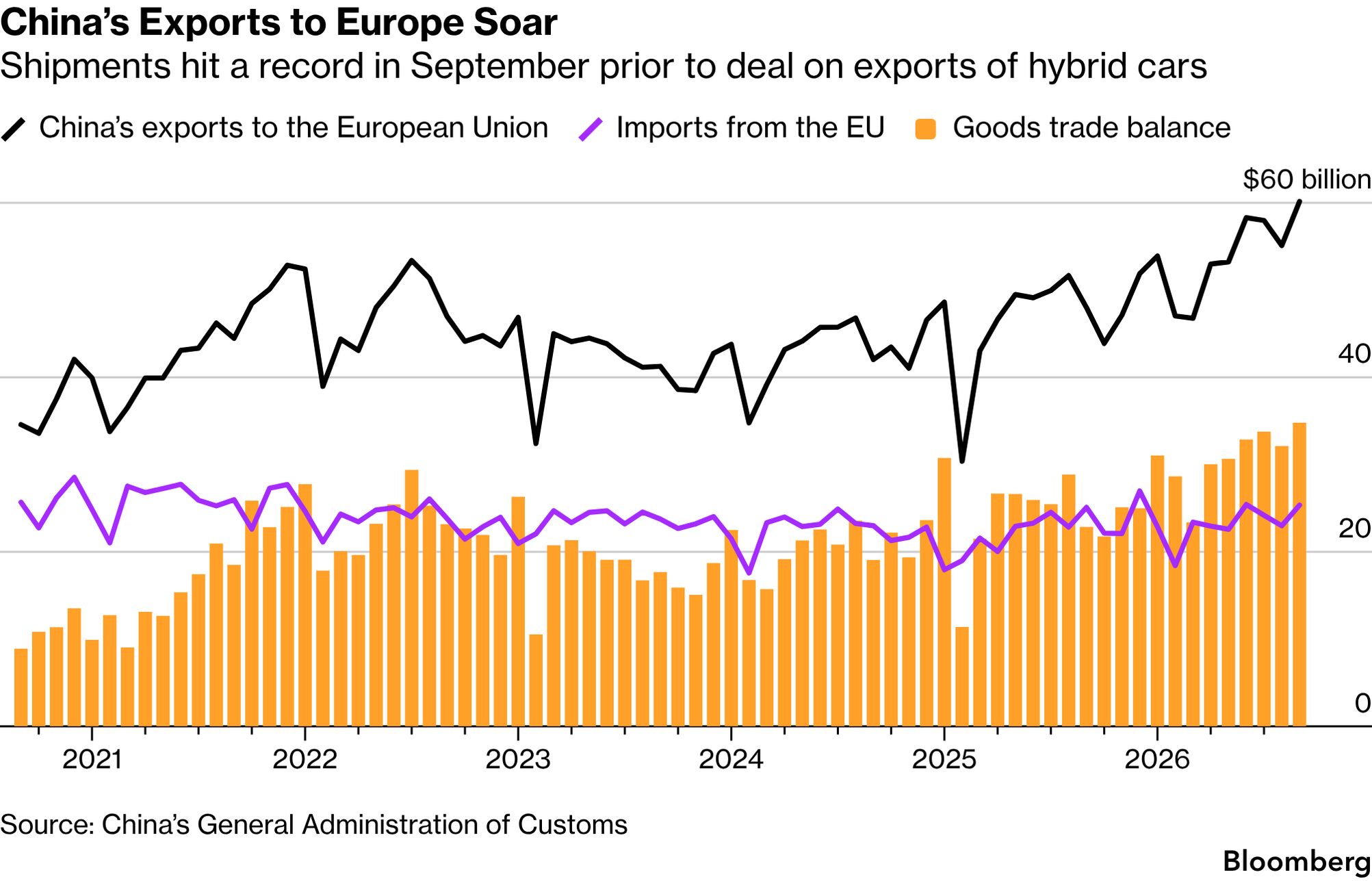
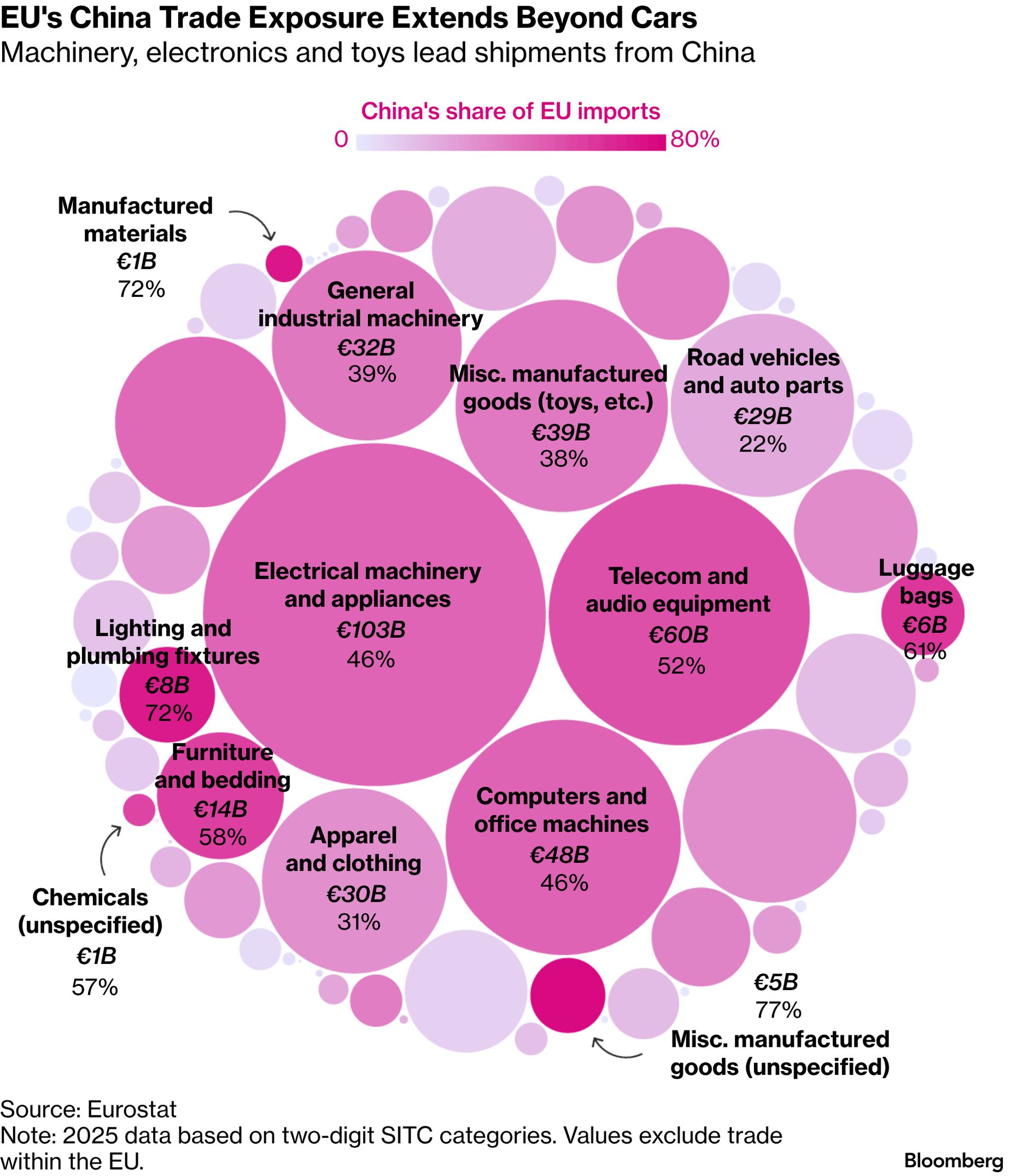
From the said regulation imposing a provisional safeguard measure with regard to imports of certain new hybrid vehicles designed for the transport of persons:
(41) The Commission performed the price analysis on 25 imported models and 29 models manufactured by the Union industry within the four categories, covering over 200 000 imported pieces. The price comparisons showed a significant price difference between the import prices from all exporting countries and the Union industry’s prices. The import prices are around 18 % lower than the Union producers’ prices.
(104) In accordance with Article 18 of Regulation (EU) 2015/478 provisional measures must not apply to any product originating in a developing country WTO member, Algeria and Lebanon as long as its share of imports of that product into the Union does not exceed 3 %, provided that developing country members with less than a 3 % import share, collectively, do not account for more than 9 % of total Union imports of the product concerned.
(105) Annex I.1 lists the developing countries that are members of the WTO, as well as Algeria and Lebanon, which may qualify for an exemption from safeguard measures, subject to the conditions set out in the recital above.
(108) In addition, as set out in Section 4, also Ukraine, the European Economic Area (EEA) and Kenya should be excluded from the scope of provisional measures.
(109) In view of the requirements of the Agreement on the withdrawal of the United Kingdom of Great Britain and Northern Ireland from the European Union and the European Atomic Energy Community (the ‘Withdrawal Agreement’), of which the Windsor Framework is an integral part, and of Regulation (EU) 2020/2170 of the European Parliament and of the Council and in order to ensure that the products concerned can continue entering Northern Ireland, those products should not be subject to quotas when brought from another part of the United Kingdom and sold to final consumers in the territory of Northern Ireland and registered for use in Northern Ireland. Based on the evidence available, the Commission does not consider that this may pose a significant risk to the effectiveness of the measure. Nevertheless, the Commission will closely monitor trade flows of the product concerned moved from another part of the United Kingdom into Northern Ireland, as well as subsequent trade flows from Northern Ireland into the rest of the Union, and may amend this Regulation as necessary.
(110) It was preliminarily concluded that the Union producers are suffering a threat of serious injury. Given the critical circumstances explained in Section 10, it is considered that provisional safeguard measures should be taken in order to prevent further damage to the Union industry which would be difficult to repair before the conclusion of the current investigation.
Article 1
...
Where a quota is exhausted, the imports of the product concerned shall not be allowed to enter the Union.
I.1 — List of developing countries, members of the WTO, Algeria and Lebanon
Afghanistan, Albania, Algeria, Angola, Antigua and Barbuda, Argentina, Armenia, Bahrain, Bangladesh, Barbados, Belize, Benin, Bolivia, Botswana, Brazil, Brunei Darussalam, Burkina Faso, Burundi, Cabo Verde, Cambodia, Cameroon, Central African Republic, Chad, Chile, China, Colombia, Congo, Costa Rica, Côte d'Ivoire, Cuba, Democratic Republic of the Congo, Djibouti, Dominica, Dominican Republic, Ecuador, Egypt, El Salvador, Eswatini, Fiji, Gabon, Gambia, Georgia, Ghana, Grenada, Guatemala, Guinea, Guinea-Bissau, Guyana, Haiti, Honduras, Hong Kong, India, Indonesia, Jamaica, Jordan, Kazakhstan, Kenya, Kuwait, Kyrgyz Republic, Lao People's Democratic Republic, Lebanon, Lesotho, Liberia, Macao, Madagascar, Malawi, Malaysia, Maldives, Mali, Mauritania, Mauritius, Mexico, Moldova, Mongolia, Montenegro, Morocco, Mozambique, Myanmar, Namibia, Nepal, Nicaragua, Niger, Nigeria, North Macedonia, Oman, Pakistan, Panama, Papua New Guinea, Paraguay, Peru, Philippines, Qatar, Rwanda, Saint Kitts and Nevis, Saint Lucia, Saint Vincent and the Grenadines, Samoa, Saudi Arabia, Senegal, Seychelles, Sierra Leone, Solomon Islands, South Africa, Sri Lanka, Suriname, Tajikistan, Tanzania, Thailand, Timor-Leste, Togo, Tonga, Trinidad and Tobago, Tunisia, Türkiye, Uganda, Ukraine, United Arab Emirates, Uruguay, Vanuatu, Venezuela, Vietnam, Yemen, Zambia, Zimbabwe.
I.2 — List of developing countries to which the provisional measures apply
China, Türkiye, Mexico and Morocco.
Volumes of quotas:
| Country | From 1 Dec. 2026 to 28 Feb. 2027 |
From 1 March 2027 to 31 May 2027 |
From 1 to 18 June 2027 |
|---|---|---|---|
| China | 86,301 | 88,219 | 17,260 |
| Japan | 76,900 | 78,609 | 15,380 |
| Türkiye | 56,844 | 58,107 | 11,369 |
| United Kingdom | 47,431 | 48,485 | 9,486 |
| Republic of Korea | 30,566 | 31,245 | 6,113 |
| Mexico | 15,640 | 15,987 | 3,128 |
| Morocco | 10,779 | 11,019 | 2,156 |
| Serbia | 8,709 | 8,902 | 1,742 |
| United States of America | 8,317 | 8,502 | 1,663 |
| South Africa | exempted | exempted | exempted |
| Other countries | 370 | 378 | 74 |